Other conditions at this reading
- Dew point
- 7.0°C
- Humidity
- 93%
- derived from the temperature and dew point
- Wind
- Variable, 4 km/h
- Pressure
- 1010.8 hPa
- altimeter setting, QNH
- Visibility
- 6.0 km
Where Muş Arpt stands
Its highest placing today was 2,021st of 5,130, reached at 06:00 UTC.
- Best global cold placing in 44 days recorded: 544th of 9,009.
- Was the coldest reporting station in Türkiye on 1 of those 44 days.
Ranking as of 09:45 UTC.
The last 24 hours
Local timeThe record book, month by month
The highest and lowest here · with the day it happenedWe hold a record for 3 months here so far, September and October and November. The rest of the year fills in as this station reports through it.
- 1
At 06:22 it was 6.0°C. By 11:50 it was 8.0°C. The night never stood a chance.
From our dataToday so far at this station, in local time.
New facts every day. Report an error.
Highest we have recorded
31.0°C
- Date
- Sunday, 27 September 2026
- Time of day
- 14:50 local
- Location
- Muş Arpt, Türkiye
- Position
- 38.75°N 41.66°E · 1267 m
The highest this site has recorded here. Source: Our own observations, 47 days.
Lowest we have recorded
2.0°C
- Date
- Sunday, 11 October 2026
- Time of day
- 05:50 local
- Location
- Muş Arpt, Türkiye
- Position
- 38.75°N 41.66°E · 1267 m
The lowest this site has recorded here. Source: Our own observations, 47 days.
Recent readings
Each reading as it arrived, newest first, with what our quality checks did with it. A reading we did not count is shown struck through with the reason.
| Time | Temp | Change | Status |
|---|---|---|---|
| high | 8.0°C | 0.0°C | Counted |
| 8.0°C | 0.0°C | Counted | |
| 8.0°C | +1.0°C | Counted | |
| 7.0°C | 0.0°C |
Recent temperature history
The same record at three widths, picking up where the last 24 hours above leaves off. Each period is summarised from the grain that suits it, so nothing here is one reading repeated thousands of times into the page.
Nearby, and the opposite
- Nearest stationMus6.3°C12.7 km away, today's high
- Warmest nearbyBatman Arpt14.0°C102.5 km away
- Coldest nearbyBingol6.9°C101.7 km away, today's low
- The opposite of hereAmundsen-Scott South Pole Station−49.5°CAntarctica
Muş Arpt (LTCK) is a METAR weather station in Türkiye, 1,267 m above sea level, about 15 km from Muş.
We have kept a daily record here since 22 September 2026, every one of the 47 days this site has existed. We have stored 857 observations across the 46 of those days for which we also recorded a count.
In summary
Over the last week we have readings for 7 days here, running from 4.0°C to 17.0°C, a spread of 13.0°C.
It reports about every 32 minutes, and sent 15 readings in the last 24 hours.
Its best placing today was 2,021st coldest of the 5,130 stations reporting.
What stands out here
- Its best placing so far is 198th hottest of the 9,009 stations reporting worldwide.
Recent highlights
- and the 1 days before it
Fell to 2.0°C, the lowest we have recorded here, beating 3.0°C on Sat 10 Oct 2026.
Reached 23.0°C, its highest of October, beating 22.0°C on Sat 10 Oct 2026.
Highest and lowest we have recorded here
Highest
31.0°C
Sun 27 Sep 2026 at 14:50 local
Lowest
2.0°C
Sun 11 Oct 2026 at 05:50 local
These are not official records. They are the highest and lowest readings this site has stored for Muş Arpt since September 2026, across 47 days we hold a reading for. Official climatological records are adjudicated by national meteorological services and by the WMO.
By month, from our own record
| Month | High | Low | Mean | Days | Readings |
|---|---|---|---|---|---|
| November 2026 | 17.0°C | 4.0°C | 9.4°C | 7 | 114 |
| October 2026 | 23.0°C | 2.0°C | 12.9°C | 31 | 607 |
| September 2026 | 31.0°C | 8.0°C | 20.8°C | 8 of 9 | 136 |
Means are of the readings we stored, weighted by how often this station reported, so they are not daily averages and not climate normals. Some days were recorded before we began counting observations and contribute their high and low but not the mean.
By year, from our own record
2026
Highest 31.0°C, lowest 2.0°C, mean 13.7°C. 47 days recorded from 857 readings.
Recent days
A reading on every one of the last 30 days. Typically 18 readings a day.
| Day | High | At | Low | At |
|---|---|---|---|---|
| 2026-11-07 | 8.0°C | 08:50 UTC | 6.0°C | 03:22 UTC |
| 2026-11-06 | 8.0°C | 13:53 UTC | 4.0°C | 02:19 UTC |
| 2026-11-05 | 11.0°C | 07:50 UTC | 6.0°C | 04:24 UTC |
| 2026-11-04 | 10.0°C | 16:50 UTC |
What we have stored, day by day
We have readings for every one of the 47 days since we started storing this station on 22 September 2026.
Tracking history
It has reported on every day since Tue 22 Sep 2026.
- First reading stored25.0°C on our first day here
- 100 readings storedfired late: 1 earlier day(s) carry no reading count
- 30 days reporting without a gap
Where this station is
This station lies about 4,300 km north of the equator.
Where Muş Arpt is
z6
38.75°N 41.66°E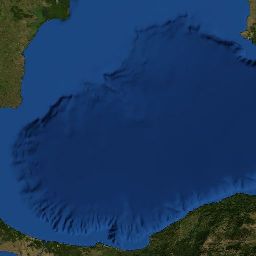



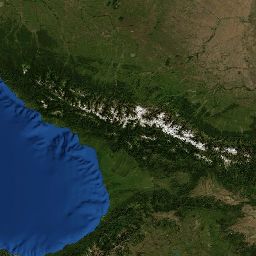







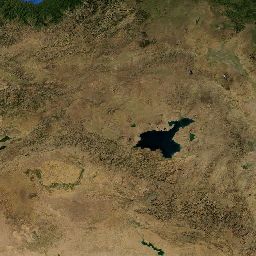






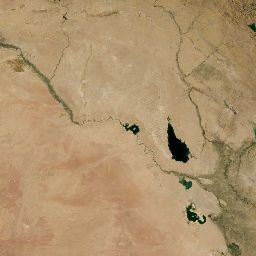

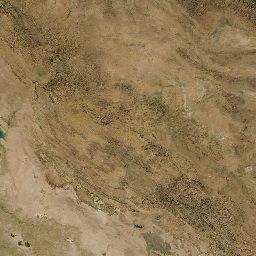
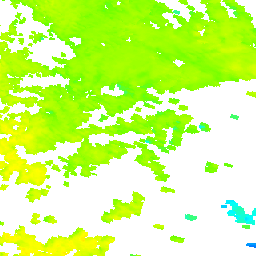


Muş Arpt
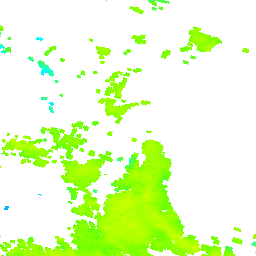
Ground · satellite
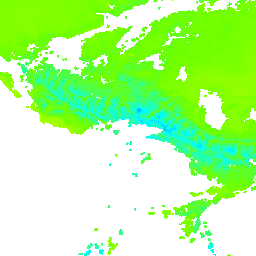
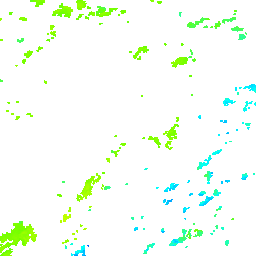
Land surface temperature for 2026-11-06, from NASA GIBS. This is the temperature of the ground seen from orbit, not the air, and it is never ranked against air readings. Cloud hides the ground, so gaps are unread rather than guessed.
View more on Google Maps38.7480°N, 41.6610°E
Muş Arpt, answered from the data
What is the highest temperature ever recorded in Muş Arpt?
31.0°C (87.8°F) on Sunday, 27 September 2026. That is the highest this site has recorded at this station. It is not an officially certified record unless a meteorological authority has recognised it.
Our own observations
What is the lowest temperature ever recorded in Muş Arpt?
2.0°C (35.6°F) on Sunday, 11 October 2026. That is the lowest this site has recorded at this station.
Our own observations
What is the temperature in Muş Arpt right now?
8.0°C (46.4°F), measured at 11:50 local on Saturday 7 November.
Live reading from the station, after our quality checks
Is Muş Arpt the coldest place on Earth?
Not right now: it is 3,929th of the 8,970 stations reporting to us. Its best position since we started watching is 544th of 9,009. We rank the stations that report to us, which is not the same as every place on Earth.
Our live rankings
Where does Muş Arpt rank among the coldest places in Türkiye?
Right now it is 69th coldest of the 176 stations we track in Türkiye.
Our live rankings
Data sources for this page
Readings here arrive through NOAA METAR. METAR is the routine aerodrome weather report, issued for aviation, typically every 30 or 60 minutes and more often when conditions change. It updates far more frequently than a synoptic report, which is why these pages have a usable chart.
| Figure | Source | Type |
|---|---|---|
| Latest reading, today so far | NOAA Aviation Weather Center (METAR) and NOAA NWS WMO bulletins (SYNOP) | Measured, station |
| Nearby stations and distances | Computed from station positions in our own database | Calculated |
How these readings are checked
Every reading on this page has passed the checks below. A reading that fails any of them is stored as refused and can never be ranked, shown as a record, or counted in a daily high or low.
No reading from this station has been refused in the last 14 days.
- 01
Has a real position
A reading with no usable latitude and longitude is discarded. It cannot be ranked, mapped, or compared with its neighbours, and a temperature with no place is not an answer to which place is hottest.
- 02
Position is not a placeholder
Some feeds fill an unknown position with a stand-in value such as 99.99 degrees or an elevation of 9999 m. Those are not coordinates. They are caught separately from a missing position because a station placed at a fake point has no neighbours, so the neighbour check below can never see anything wrong with it.
- 03
The bulletin itself is current
SYNOP arrives as files that are only re-read when they change. A file that has stopped being updated is set aside whole, before any reading inside it is considered.
- 04
The reading is recent enough for its network
Different networks get different windows, because they report at different rates: 2 hours for METAR, which transmits continuously, and 9 hours for SYNOP, which reports at 00, 06, 12 and 18 UTC. A single rule would have discarded the entire synoptic network, including every station in Antarctica.
- 05
Inside the range of measured temperature