No readings held for this station
This station has not reported a qualifying observation since Thu 1 Jan 1970.
8 Octobers on record
Average high · NOAA GHCN-Daily8 Octobers of readings here, 2018 to 2025. Too few for a trend line.
Warmest October here: 2022, averaging 19.9°C. Coldest: 2020, averaging 14.7°C.
No hot facts meet our standard for this place today. We only publish facts we can source or calculate.
New facts every day. Report an error.
Vaduz (WMO 06990) is a weather station in Liechtenstein, 460 m above sea level.
Nearby, and the opposite
- Nearest stationRheineck/Altenrhein21.0°C39.2 km away, today's high
- Warmest nearbyDübendorf Arpt23.0°C72.1 km away
- Coldest nearbySamedan Arpt−2.0°C73 km away, today's low
- The opposite of hereVostok−66.8°CAntarctica
Where this station is
This station lies about 5,200 km north of the equator.
Where Vaduz is
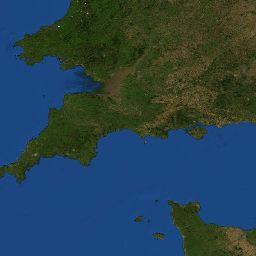













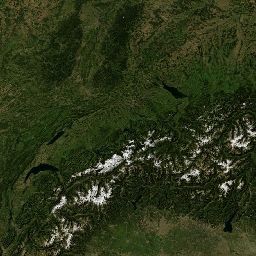

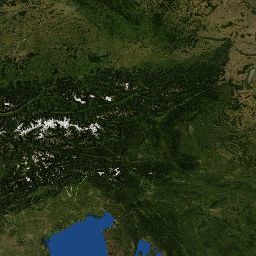



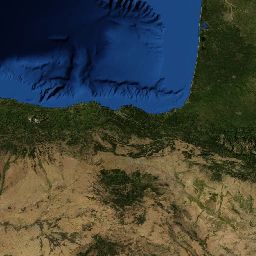

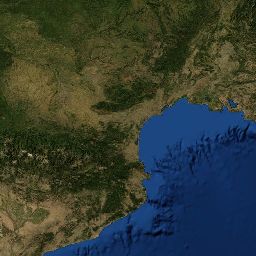

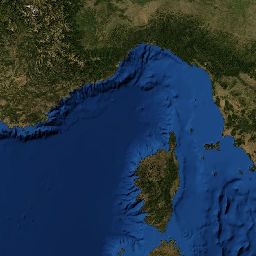



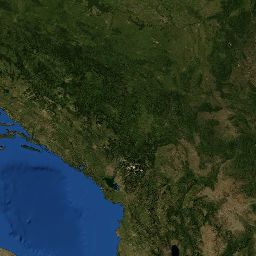

Land surface temperature for 2026-10-05, from NASA GIBS. This is the temperature of the ground seen from orbit, not the air, and it is never ranked against air readings. Cloud hides the ground, so gaps are unread rather than guessed.
View more on Google Maps47.1333°N, 9.5167°E
Data sources for this page
Readings here arrive through NOAA METAR. METAR is the routine aerodrome weather report, issued for aviation, typically every 30 or 60 minutes and more often when conditions change. It updates far more frequently than a synoptic report, which is why these pages have a usable chart.
| Figure | Source | Type |
|---|---|---|
| Latest reading, today so far | NOAA Aviation Weather Center (METAR) and NOAA NWS WMO bulletins (SYNOP) | Measured, station |
| Nearby stations and distances | Computed from station positions in our own database | Calculated |
How these readings are checked
Every reading on this page has passed the checks below. A reading that fails any of them is stored as refused and can never be ranked, shown as a record, or counted in a daily high or low.
No reading from this station has been refused in the 11 days since readings began being logged against individual stations.
- 01
Has a real position
A reading with no usable latitude and longitude is discarded. It cannot be ranked, mapped, or compared with its neighbours, and a temperature with no place is not an answer to which place is hottest.
- 02
Position is not a placeholder
Some feeds fill an unknown position with a stand-in value such as 99.99 degrees or an elevation of 9999 m. Those are not coordinates. They are caught separately from a missing position because a station placed at a fake point has no neighbours, so the neighbour check below can never see anything wrong with it.
- 03
The bulletin itself is current
SYNOP arrives as files that are only re-read when they change. A file that has stopped being updated is set aside whole, before any reading inside it is considered.
- 04
The reading is recent enough for its network
Different networks get different windows, because they report at different rates: 2 hours for METAR, which transmits continuously, and 9 hours for SYNOP, which reports at 00, 06, 12 and 18 UTC. A single rule would have discarded the entire synoptic network, including every station in Antarctica.
- 05
Inside the range of measured temperature